
Bantam Breeds
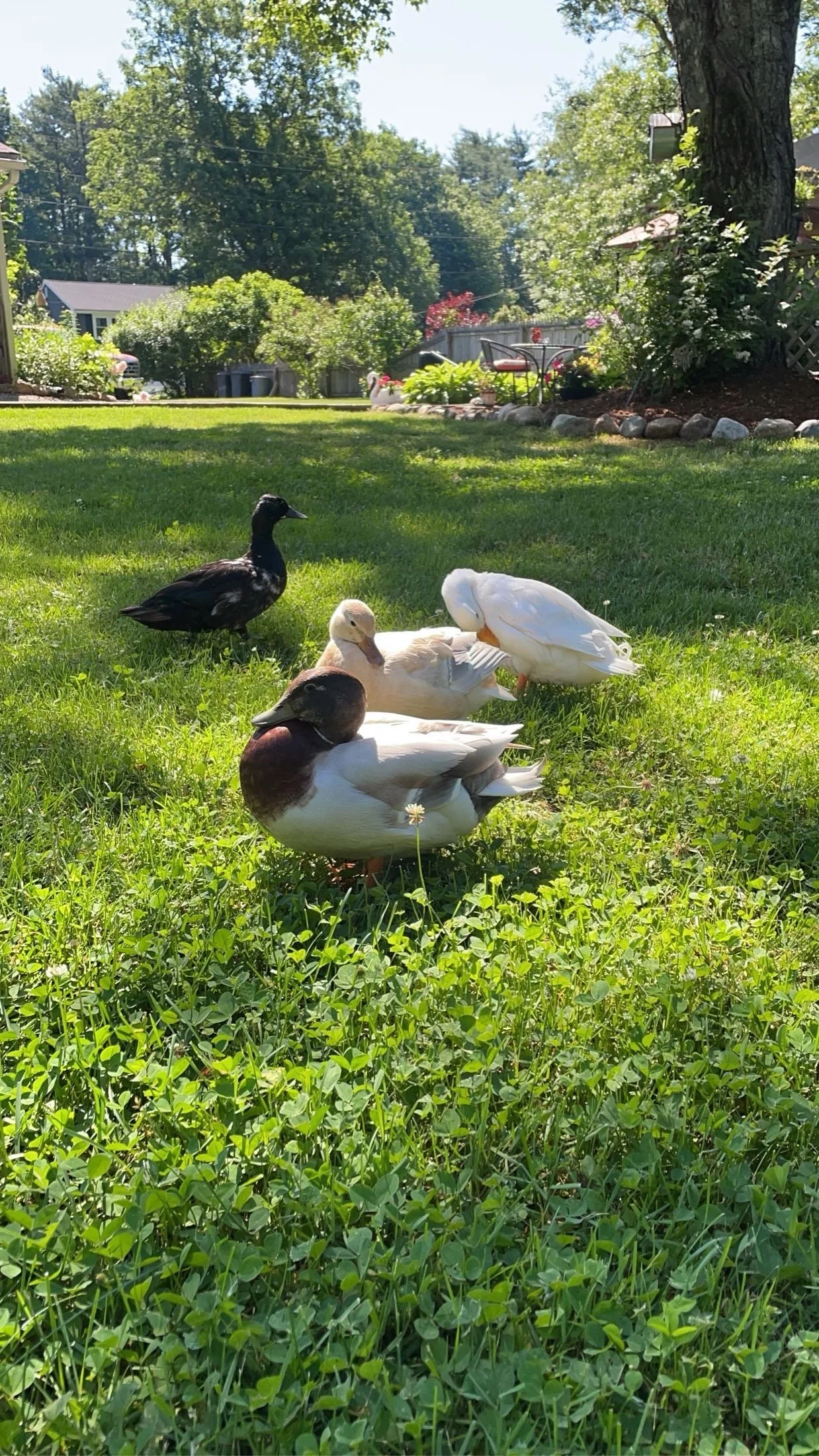
A bantam duck is a small or “miniature” breed of domestic ducks. The most common breed of Bantam duck is, of course, the Call duck. Call ducks come in a variety of colors and 2 "quality" types. The ducks that are more sought-after are the "Show Quality" type, because- like the name says- they are usually bred and kept as show birds. They are rounder, smaller, and have shorter bills compared to the other type, known as "Pet Quality". Pet quality birds are more common and are mainly kept as pets.
Black East Indie ducks are another type of Bantam, though they are far more rare than Calls. They are known for their black, iridescent sheen, and are also bred as show birds. Black East Indies (BEI) also can be bred to be blue, brown and chocolate- these birds are often called Blue East Indies, Brown East Indies or Chocolate East Indies, but contrary to what the name suggests, they are not different breeds. They are still BEI, but have been selectively bred to carry traits to change the color of the feathers as opposed to the breed standard black.
Bantam breed ducks, like bantam chickens, are significantly smaller than a typical duck. They also lay slightly smaller eggs, and lay less often, usually on average 25-75 eggs a year for Call ducks, and 40-100 eggs a year for BEI. The Call ducks lay a medium blue-green egg, and the Black East Indies lay a small dark gray egg, although during laying season the color will dilute, causing eggs to be light gray by the end of laying!
Breeds, Coloring and Genetics
Breeding
Breeding ducks can be difficult. There are so many genetic markers and traits a duck can have. It can be tricky to calculate what color your ducklings may be, or figure out what breed your ducks truly are. Breeding any mallard-derived ducks will result in fertile, mix-breed offspring. A few years ago, my BEI hen was bred with my white call drake, and they had a clutch of mix-breed ducklings. The babies were the size of a standard BEI with a long skinnier bill, long neck, and lighter, dusty looking black feathering.
Understanding Call Duck Genotypes and Phenotypes
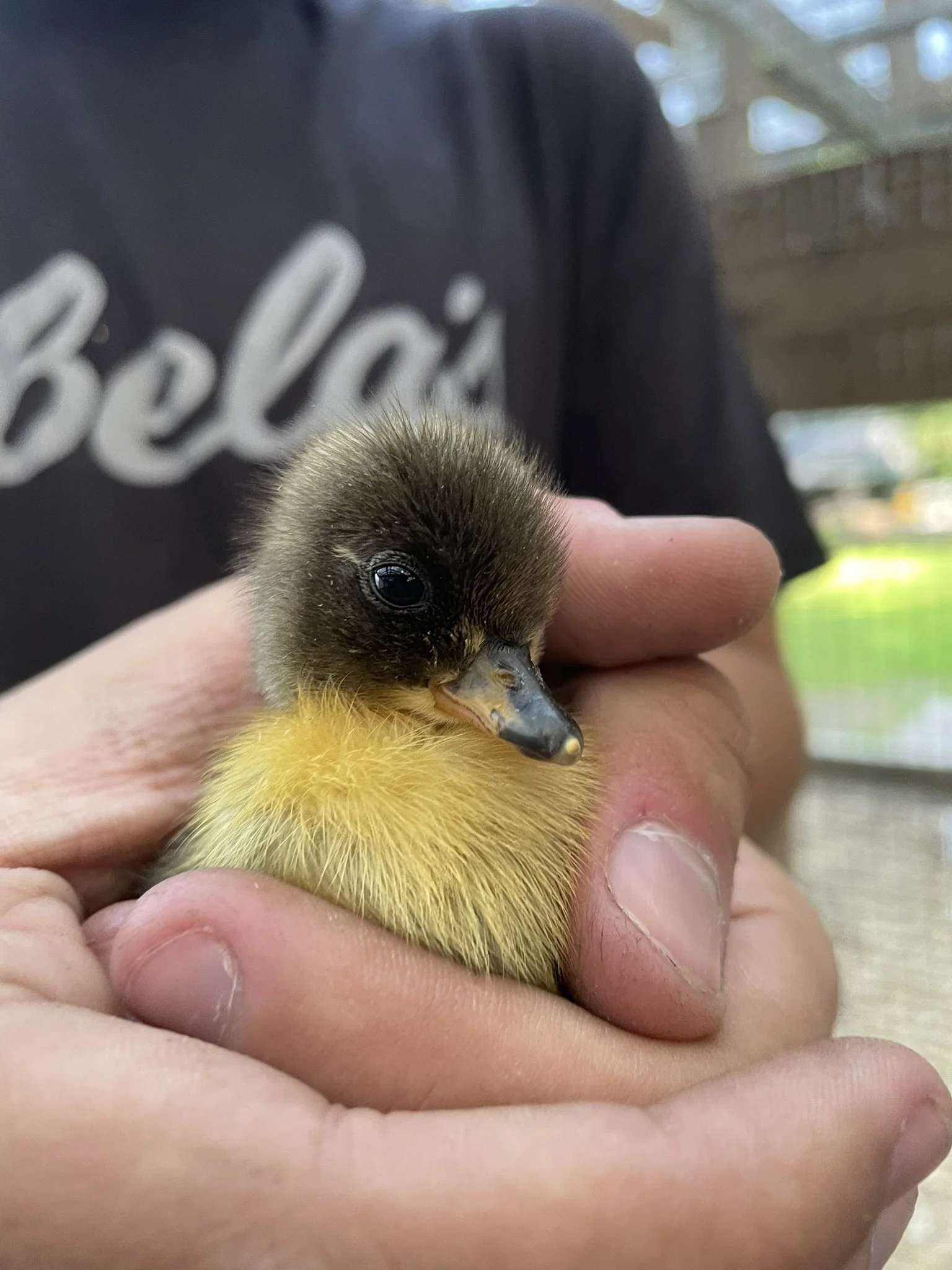
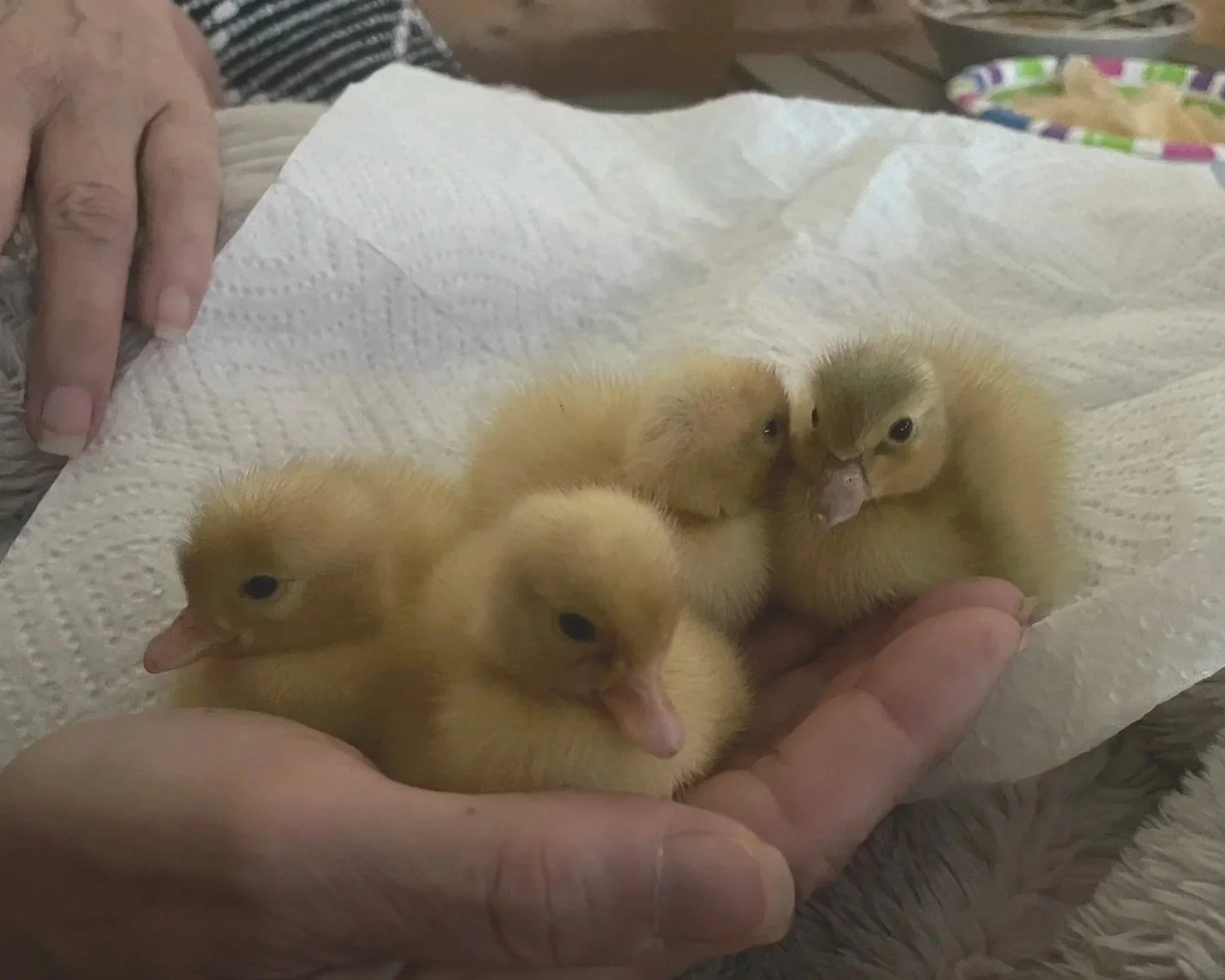
In Call ducks, the White phenotype (gene) is recessive. My two Pastel Calls, both carry one copy of the recessive white gene, resulting in their offspring having the chance to be white. Their parents were either a white duck and pastel drake, or pastel duck and white drake in order for them to be carriers of the recessive white gene. Notice the different colored ducklings in the photo.
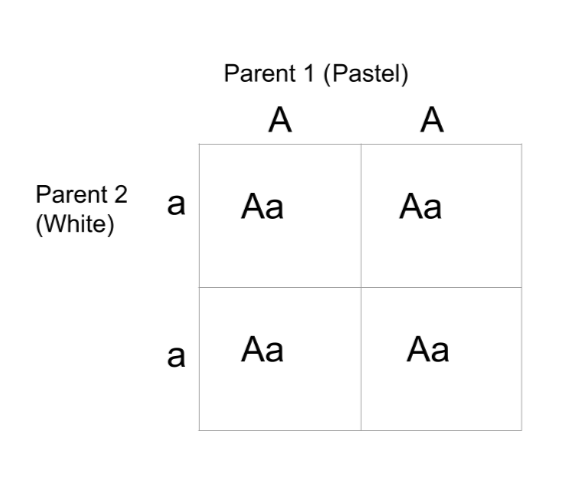
The first Punnett square to the left shows the genes of one white and one pastel call duck, both with homozygous alleles (two alleles which are the same). Both of my pastel call ducks have the "Aa" genotype.
Ducks born with "Aa" will look Pastel because the pastel "A" allele is dominant over the white "a" allele but they will also have a hidden recessive gene. The only way to get a white duck out of two colored ducks would be if both ducks carried one set of the recessive gene- in this case shown as "a".
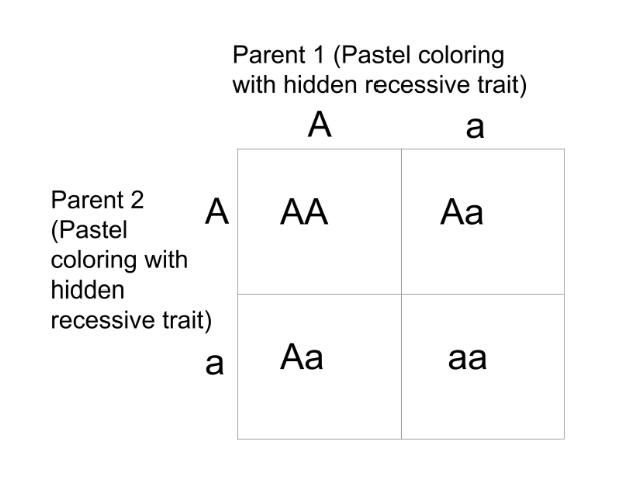
The second Punnett square shows the genotypes of two ducks that are heterozygous (carry one copy of the recessive gene and one copy of the dominant gene) and the possible outcomes when breeding.,
Ducks born with "AA" and "Aa" in this case, will present with Pastel coloring, and ducks born with two copies of the recessive gene "aa" will be White, as they only carry the recessive gene.
History
Call ducks were originally bred to be live decoy ducks for hunters. The females' loud calls and small size would attract whole flocks of wild ducks for the hunters to have a better chance at shooting. Over several decades, they have been used less as live decoys and are kept more as ornamental pet birds or show birds. Call ducks have high records of winning in the Bantam poultry shows, alongside the BEI.
Black East Indies are thought to have originated in The United States, and are also one of, if not the oldest breed of ornamental bantam duck. Their coloring similar to the Cayuga duck does very well in poultry shows, as well as they are also relatively rare compared to the common Call duck. Black East Indies are raised primarily as ornamental or show birds, as they are shyer than Call ducks- although they still do make great pets.